
Turn Your Story into a Comic
Write your story, AI draws it. Transform text narratives into fully illustrated comic books with consistent characters and professional artwork.
From text to comic in under 5 minutes
In one paragraph
Have a chapter or a finished short story? Paste it into COMICPAD and you get illustrated pages in minutes — the Custom tier accepts 20,000 characters and renders 21–400 pages in one job. Don't have a manuscript yet? Use /text-to-comic instead — it's prompt-driven. The honest tradeoff for adapting prose is compression: a 5,000-word short story rarely fits in 10 panels intact, so adaptation is subtraction. You keep U.S. copyright in the script you wrote; the AI-generated visuals fall under USCO Part 2's human-authorship rule. Editorial honesty: COMICPAD ranks #2 of 10 on our main listicle behind Dashtoon. Updated June 22, 2026.
Prompt vs Manuscript: Are You on the Right Page?
Two writer intents look similar but need different tools.
Have a chapter? You're in the right place.
This page covers manuscript-to-comic adaptation — pasting prose you've already written and getting back illustrated pages. Best for novelists, short-fiction writers, and serial authors with completed drafts.
Have a prompt? Use text-to-comic instead.
/text-to-comic is prompt-driven — describe what you want in a paragraph and the AI builds the story from scratch. Best for ideas without an existing draft.
What's New for Story-to-Comic in 2026
The manuscript-adaptation workflow has shifted in three ways this year.
- → USCO Part 2 (January 29, 2025) clarified that adapting your own prose into AI-illustrated comics keeps your script copyright intact — the visual layer is the open question. Adapting someone else's prose still needs a license.
- → Custom tier (21–400 pages, 20,000-char prompt) covers full-novel adaptations in one generation job — most other tools cap at 10–20 pages per render.
- → Dashtoon's $13M Series A from Peak XV (August 2025) accelerated their consistency tooling — they're now the strongest for sequential panels in our benchmark, with a steeper learning curve than COMICPAD.
Should You Adapt Your Story?
Four questions to answer before you start. The honest answer to all of them shapes the tool and tier you pick.
Do you already have a manuscript?
Yes →
Use AI story to comic (this page).
No →
Use text-to-comic — prompt-driven from a brief.
Did you write the source text yourself?
Yes →
You can adapt it. The visual layer is the AI's, but the story is yours.
No →
Get permission. Adapting someone else's prose without rights is a copyright issue.
Is the manuscript longer than 40,000 words?
Yes →
Plan to compress — adaptation cuts to the spine. Custom tier covers 21–400 pages for graphic-novel length.
No →
A standard Short/Medium/Long tier likely fits.
Does the story rely on internal monologue?
Yes →
Heavy lift — comics show the outside of characters. Convert thought to action, dialogue, or visible reaction.
No →
Easier adaptation. External-action prose translates more directly to panel sequences.
Story Length → Comic Length
How prose word counts translate into comic page counts. Compression ratios vary by story density, but these are the working defaults.
| Source length | Target comic | Approach |
|---|---|---|
| Short story (2,000–7,500 words) | 4–10 page comic | One generation job — Short or Medium tier. Compress narration into 6–8 beats; let the art carry exposition. |
| Novella (17,500–40,000 words) | 20–60 page comic | Long tier or two stacked jobs. Cut to the spine — adaptation is subtraction. |
| Full novel (50,000+ words) | 60–200+ page graphic novel | Custom tier (21–400 pages per job). Plan a chapter outline first — render in phases. |
| Web serial / chapter drops | 10–20 page episodes | Medium tier per chapter. Maintain a character bible between sessions for consistency. |
How Story to Comic Works
Your words become panels, dialogue, and art.
Write Your Story
Describe your story in plain text. Any genre, any setting, any language.
- ✓Write as little or as much as you want
- ✓AI expands short prompts into full stories
- ✓30+ languages supported
Create Characters
Describe your characters in detail. AI generates them and gives them a consistent look across every page.
- ✓AI-generated from your descriptions
- ✓Up to 6 characters
- ✓Assign roles and personalities
Choose Art Style
Pick a style that matches your story's mood. Each style transforms your narrative into a different visual experience.
- ✓8 unique art styles
- ✓Each style affects the mood
- ✓Preview before generating
AI Draws Your Comic
AI breaks your story into scenes, writes dialogue, draws every page, and assembles a complete comic book.
- ✓Scene breakdowns from your story
- ✓AI-written dialogue and narration
- ✓Export as HD PDF
Five Adaptation Principles That Actually Help
These are the editorial decisions that make AI output read like a comic instead of a slideshow of illustrated paragraphs.
Adaptation is subtraction
A 5,000-word short story rarely fits 10 panels intact. Pick the 6–8 turning moments; trust the art to imply the rest. Prose readers see the story in their head — comic readers see what you show them.
Convert internal to external
Sentences like "she felt afraid" don't render. Convert to expression, posture, or environment. "She backed into the corner, palms up" works. The most adaptable prose has visible behavior.
Dialogue compresses, doesn't expand
Speech balloons hold ~25 words comfortably. Long monologues in prose become trimmed exchanges or get split across panels. If a speech runs more than 50 words in the source, plan to cut.
Time is the gutter
Between two panels, the reader fills time. A panel of someone falling + a panel of someone in a hospital bed needs no transition art. Don't write panels for transitions prose handled with "three weeks later."
One image per beat
Each panel should advance the story by one visible step. A page of static talking heads loses readers fast. Push for at least one visual change per page.
2026 Story-to-Comic Tool Comparison
Five tools writers actually use to adapt prose. Honest ranking — COMICPAD is #2 on our main listicle, not #1.
| Tool | Paste workflow | Auto-generated | Consistency | Price | Honest note |
|---|---|---|---|---|---|
| COMICPAD | Up to 20,000 char story prompt (Custom tier) | Full panels + dialogue + cover | Up to 6 characters across pages | $6.99–$54.99/mo + Custom tier | Best for novelists adapting their own work end-to-end. We rank #2 on our main listicle. |
| Dashtoon Studio | Chapter-by-chapter, manual panel arrangement | Panel art generation; manual dialogue | Strongest in our benchmark | Free 100 imgs/day; paid not public | Strongest panel-to-panel consistency. Steeper learning curve and webtoon-leaning layout. |
| AI Comic Factory | Short prompt → 4-panel grid only | Comic-style art only; no dialogue | Weak (each panel separate) | Free (GitHub archived Oct 31 2025; Space still up) | Not built for manuscript adaptation. Useful for proof-of-concept panels. |
| Midjourney + Canva | Manual scene-by-scene prompting | Best individual panel art; manual lettering | --cref drifts past ~6 panels | $30 Midjourney + $15 Canva | Highest panel quality, hours of stitching per chapter. |
| ChatGPT/Claude + image gen | LLM splits chapter to panels | Manual handoff between text + image tool | Manual character description repetition | $20/mo + image gen credits | Hand-rolled workflow. Power-users only. |
Methodology and full ranking: Best AI Comic Generators 2026.
11 Unique Art Styles
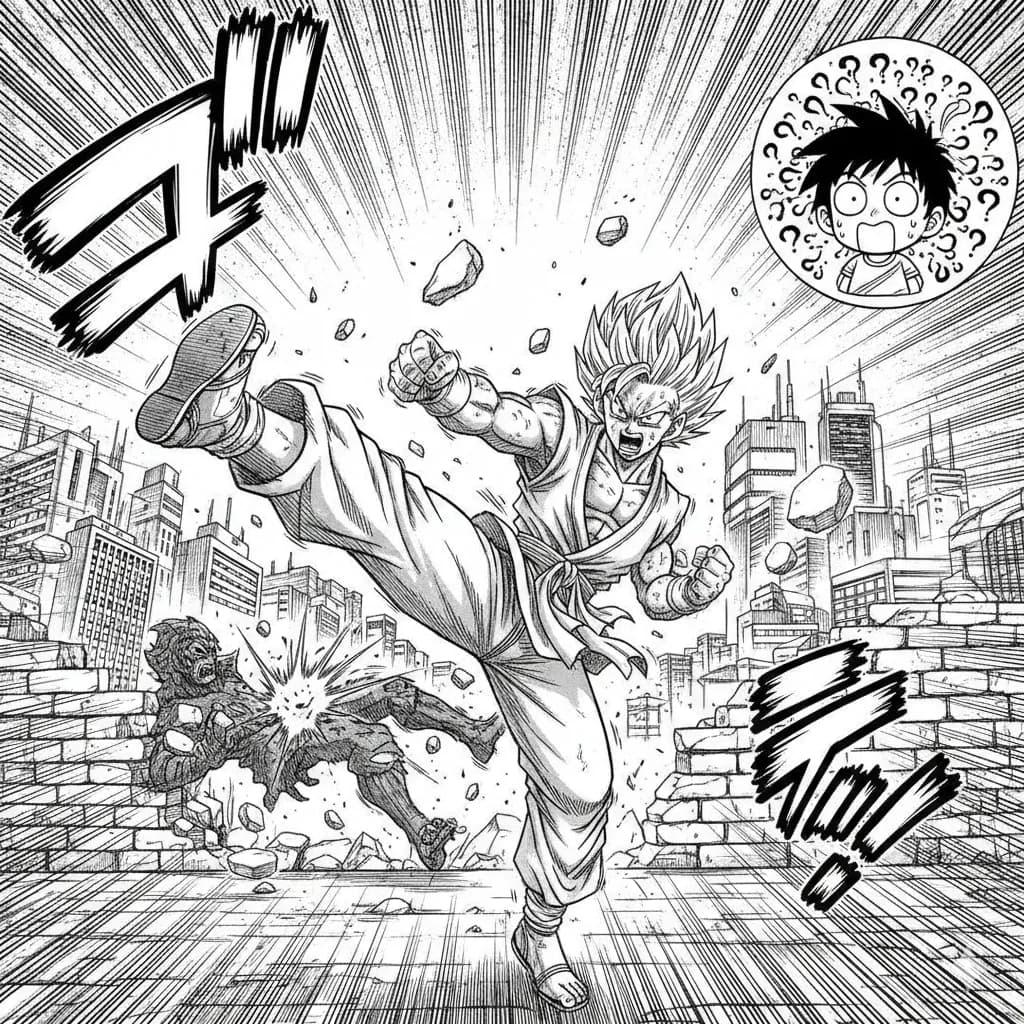
Manga
Classic Japanese manga with screentones and ink work.
Try this style →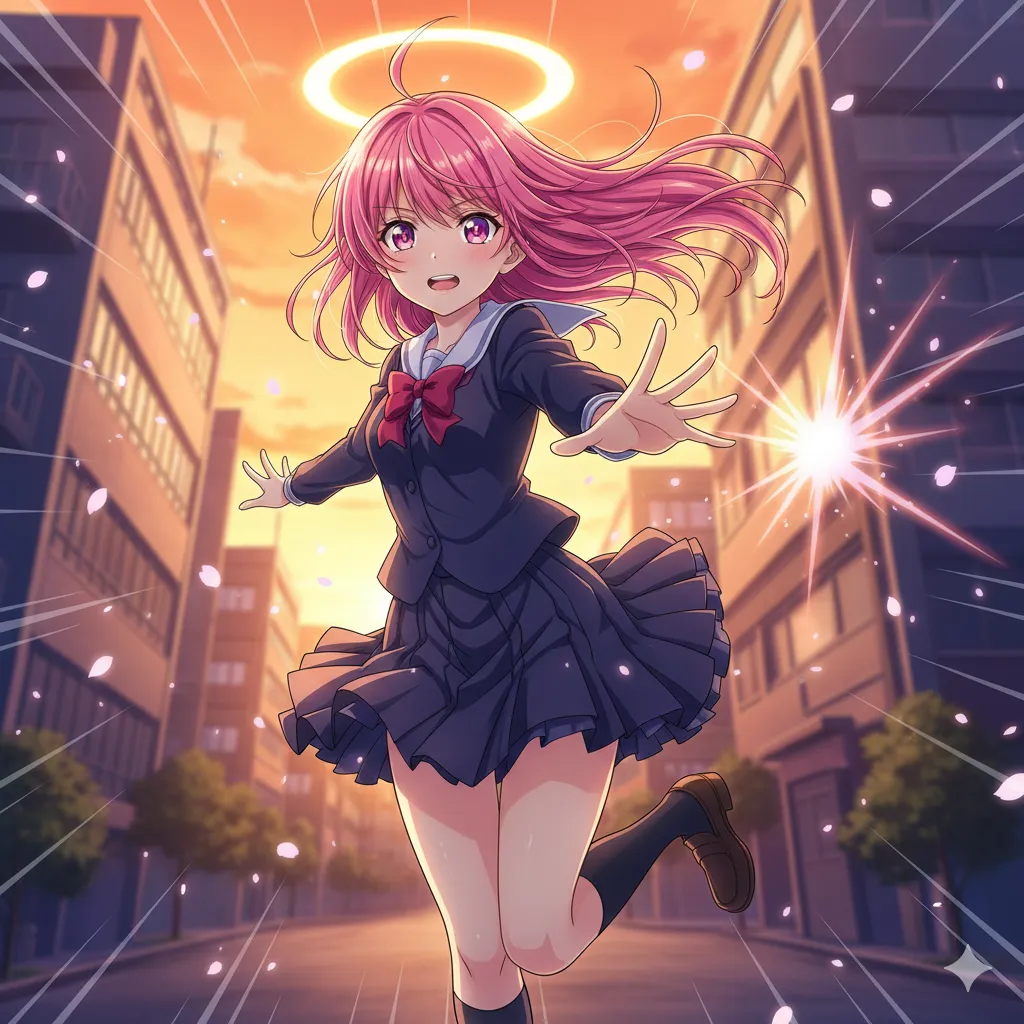
Anime
Vibrant cel-shaded art, expressive eyes, dynamic poses.
Try this style →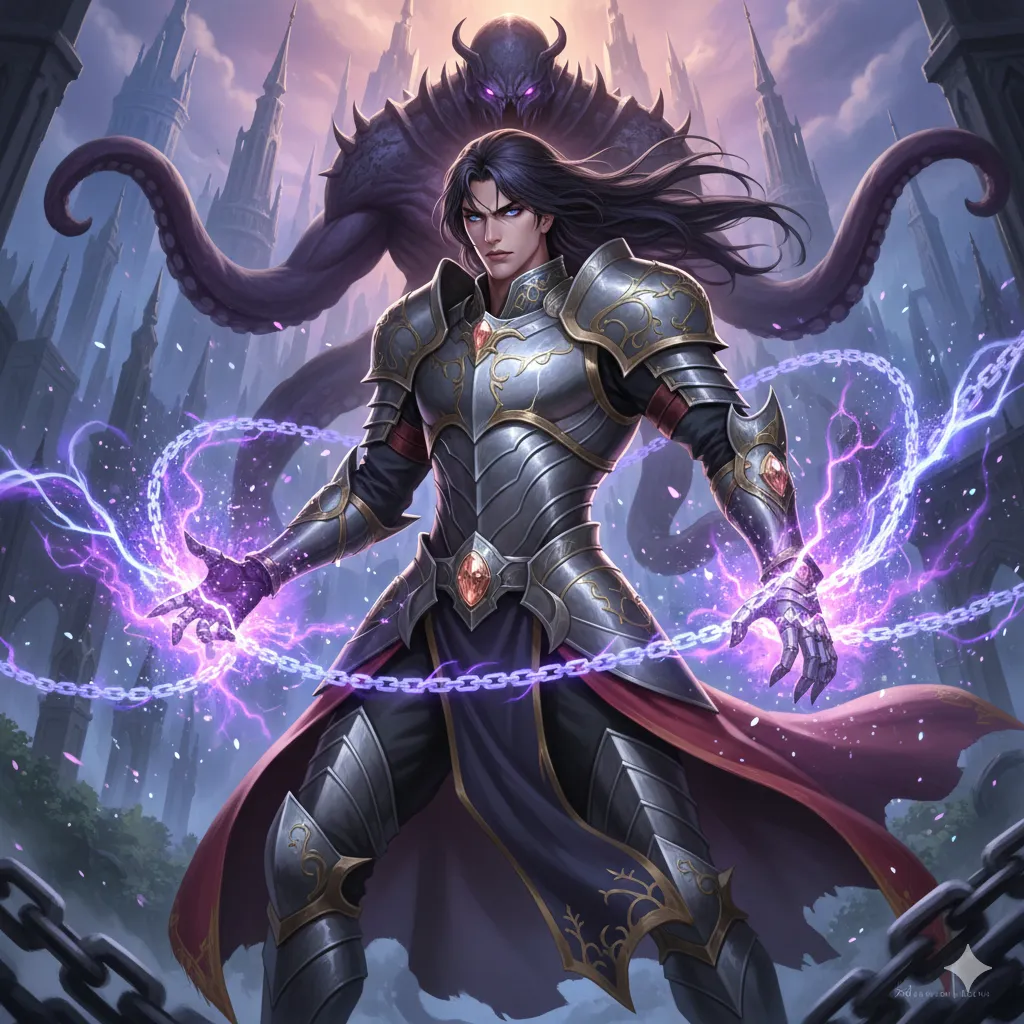
Manhwa
Korean webtoon style, full color, vertical flow.
Try this style →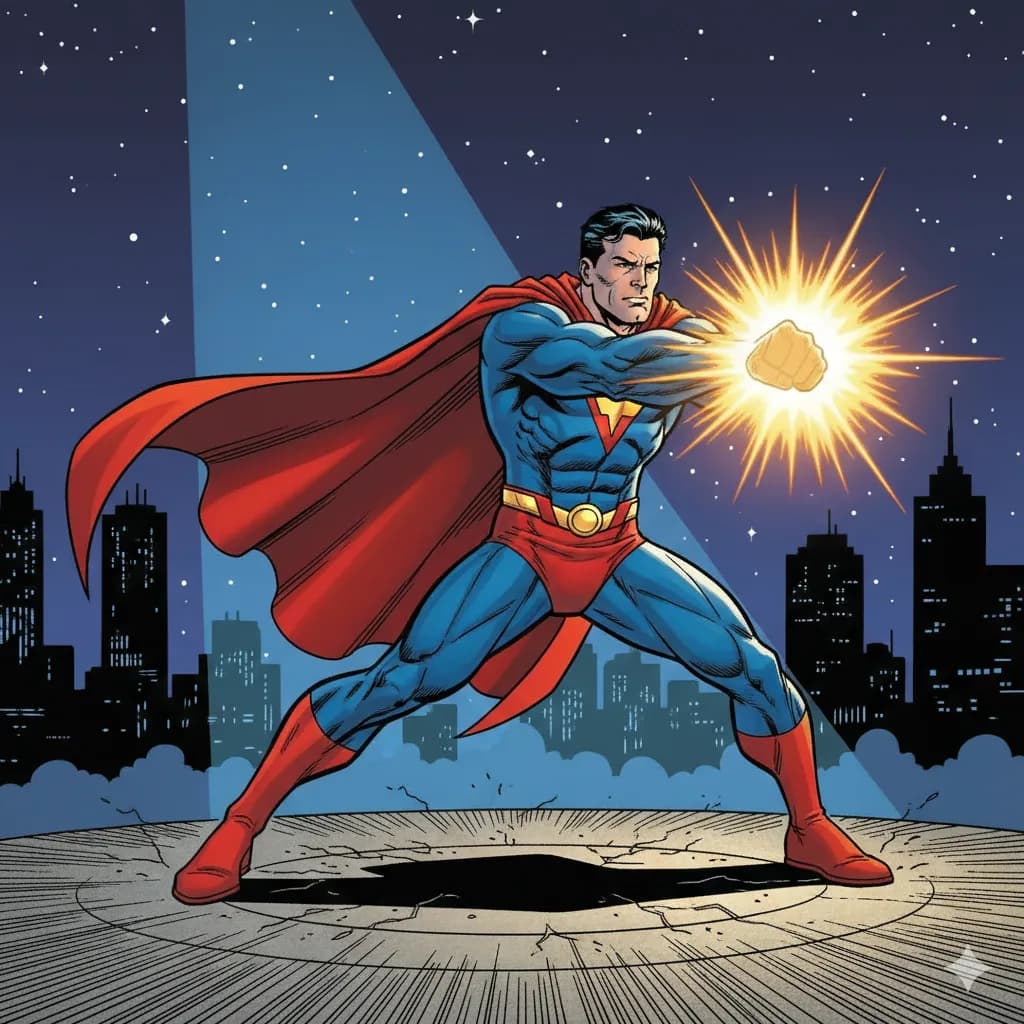
Superhero
Bold lines, vibrant colors, superhero aesthetics.
Try this style →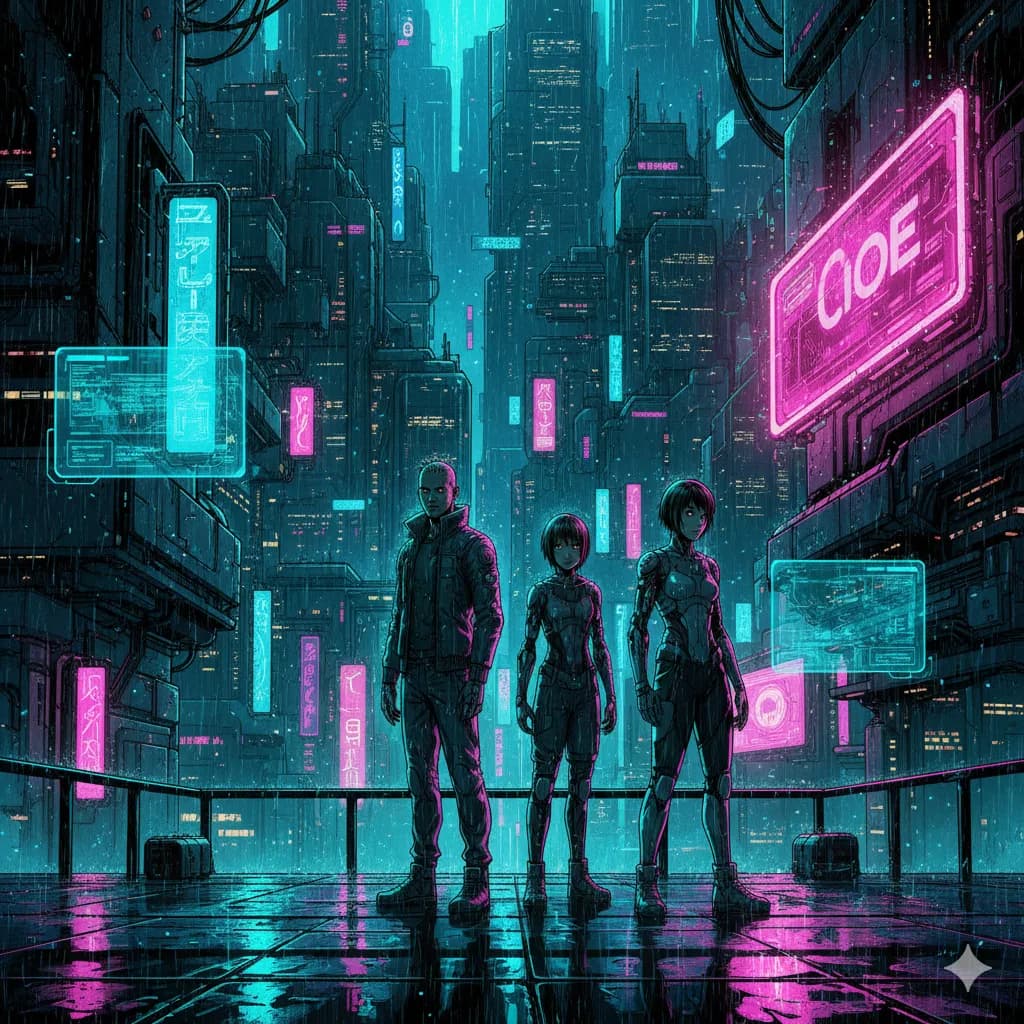
Sci-Fi
Futuristic settings, neon accents, tech-driven world.
Try this style →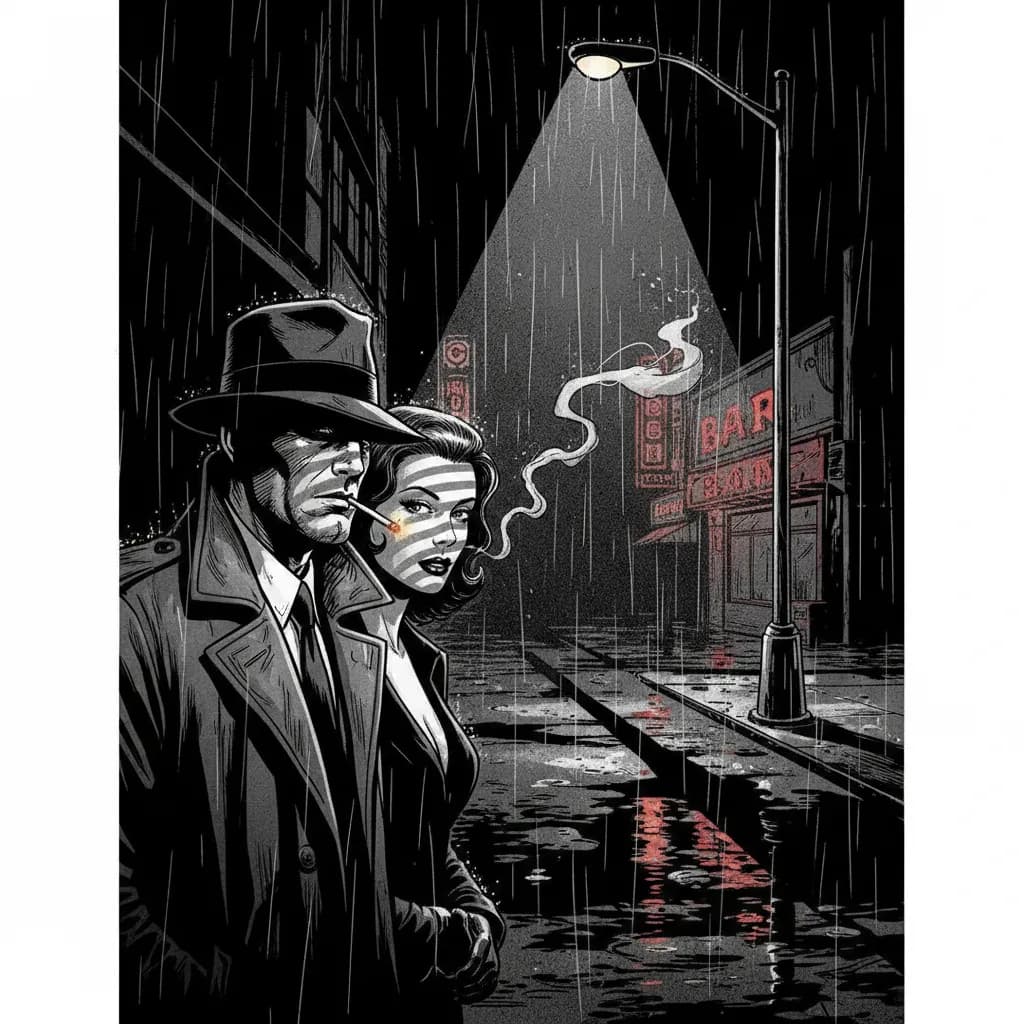
Noir
High contrast, dark moody tones, detective atmosphere.
Try this style →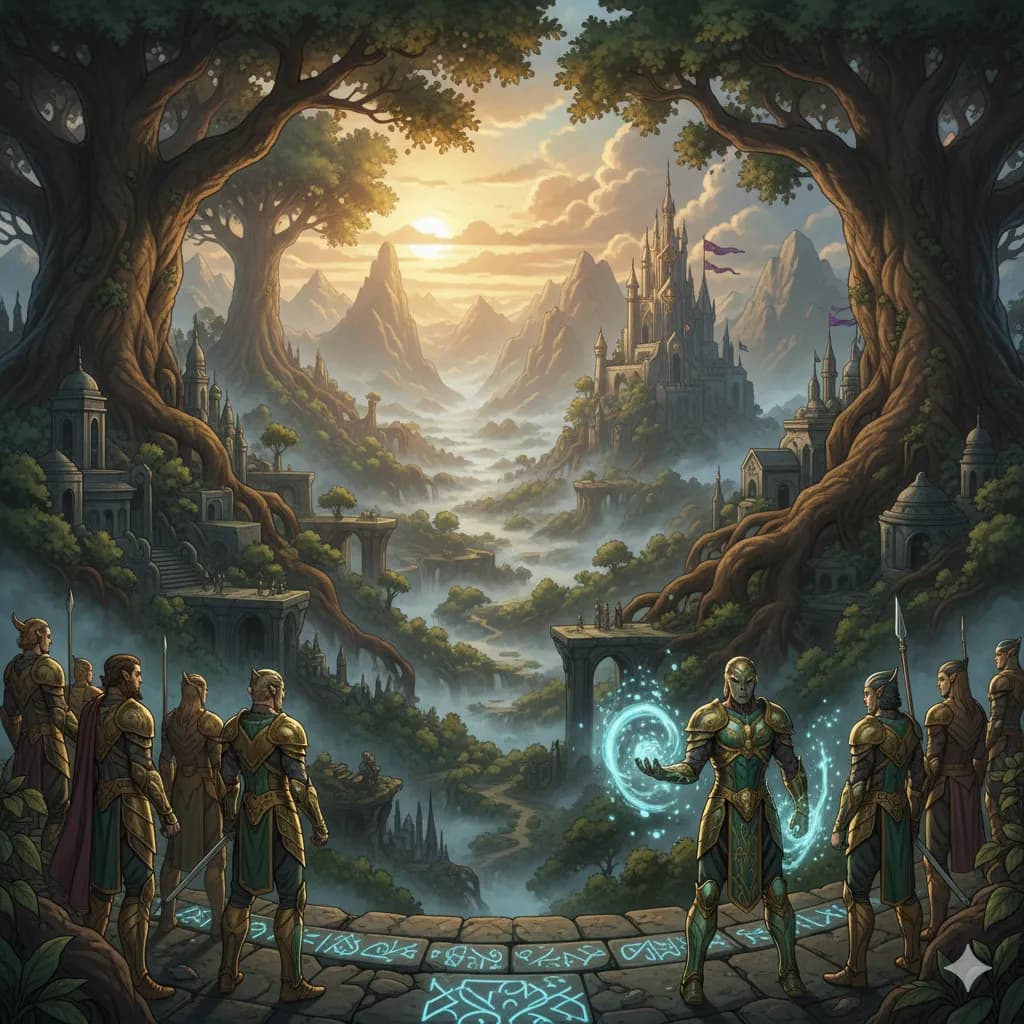
Fantasy
Epic landscapes, magical creatures, enchanted realms.
Try this style →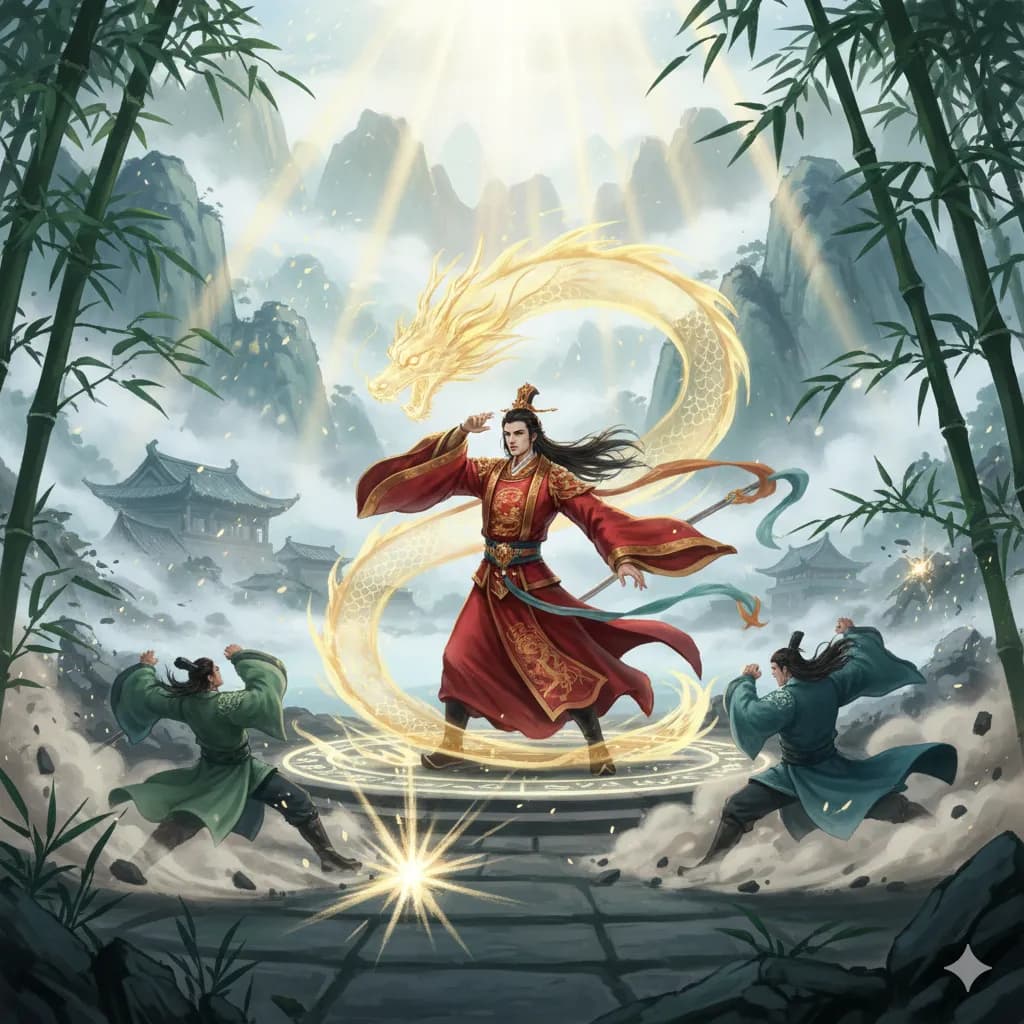
Manhua
Chinese comic style, rich colors, martial arts themes.
Try this style →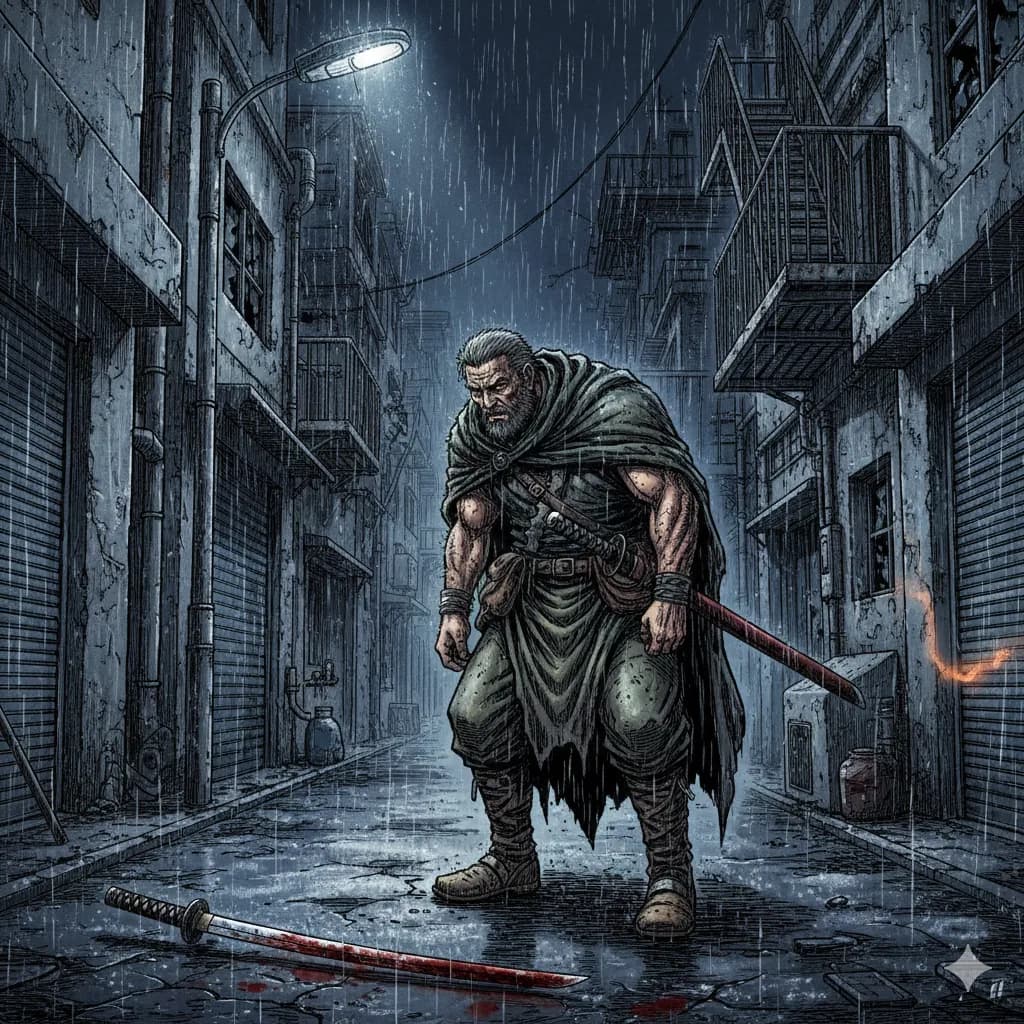
Seinen
Mature manga, detailed art, complex narratives.
Try this style →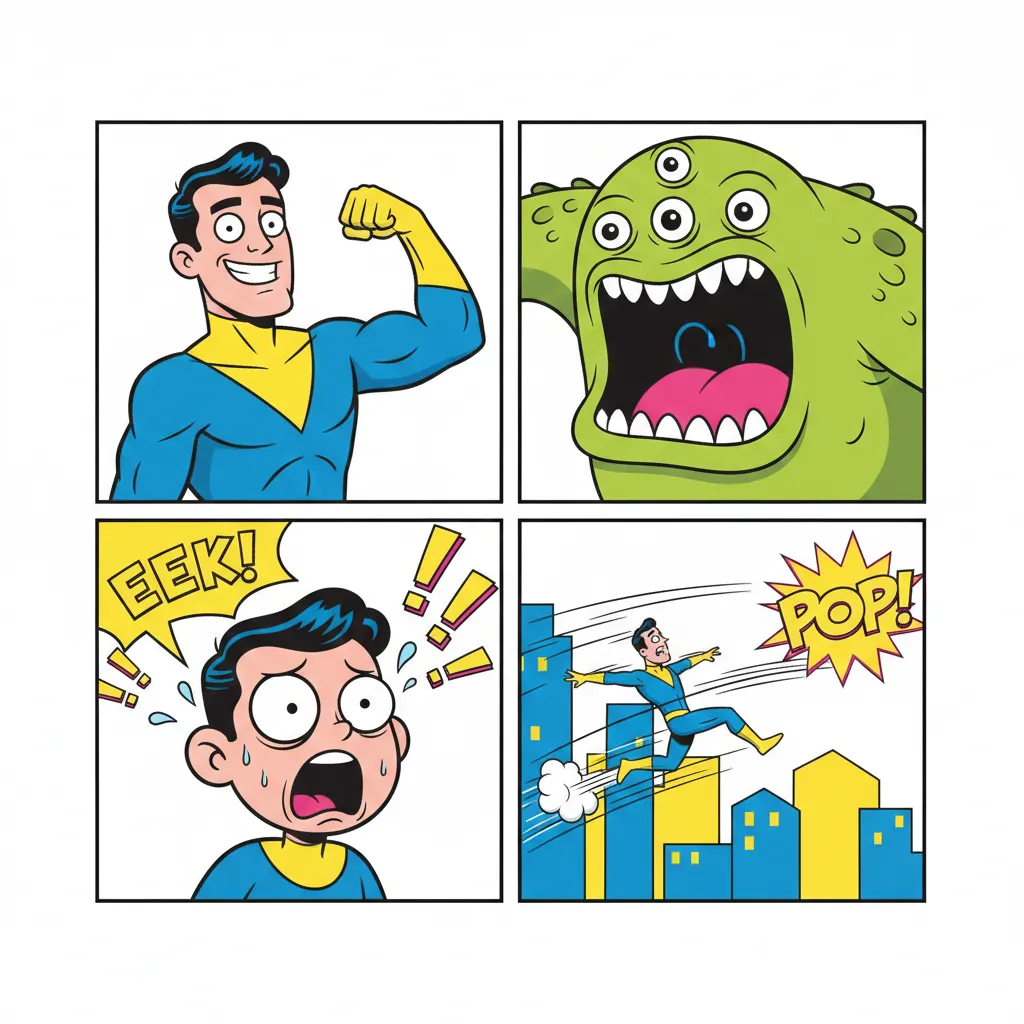
Comedy
Fun & expressive, bright colors, exaggerated features.
Try this style →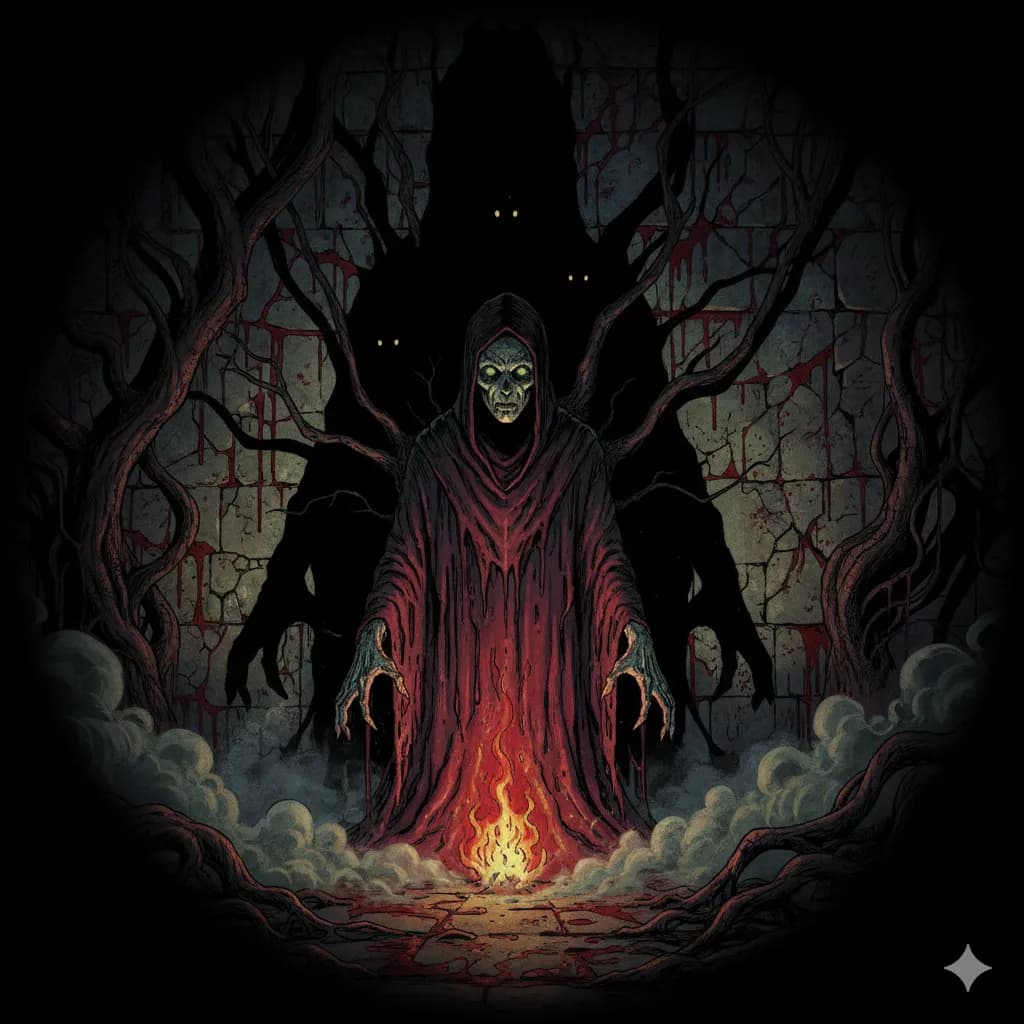
Horror
Dark shadows, eerie tones, spine-chilling imagery.
Try this style →Adapting Your Own Work: The Copyright Layer
If you wrote the source story, you already hold copyright in the prose. Adapting it into a comic is a derivative work — and you have the right to make derivative works of your own copyrighted material. The AI-generated visual layer is a separate question.
USCO Part 2 (January 29, 2025)
The U.S. Copyright Office holds that purely AI-generated images aren't copyrightable without meaningful human authorship. Your prose, panel selection, dialogue editing, character design direction, and edits to AI output establish human-authored copyright in the elements you contributed. The more editorial work you do, the more is protectable.
Adapting someone else's copyrighted prose without permission is a different problem — it's a derivative-work copyright issue regardless of the tool used. Public domain works (anything published before 1930 in the U.S. as of 2026) are safe. Otherwise, get a license. Informational, not legal advice.
Where Writers Actually Publish Adapted Comics
Four routes that work for writer-illustrators in 2026.
- → KDP (Amazon Kindle Direct Publishing) — print and digital graphic novels; the most traveled path for self-published comic adaptations. PDF upload, royalty split, ISBN optional.
- → WEBTOON Canvas / Tapas — episodic vertical-scroll. Good for serialized chapter drops; reader-facing tipping and ad revenue.
- → Substack with embedded panels — readers who already follow your prose newsletter see the visual adaptation. Direct paid-subscriber funnel.
- → Patreon / Ko-fi — direct patronage model; works for serial chapters with monthly drops.
Frequently Asked Questions
How detailed does my story need to be?
Can AI turn a novel into a comic?
Will the AI change my story?
Can I write in any language?
What genres work best?
Can I edit the AI-generated story?
More 2026 Questions for Writers
Can I adapt my own novel into a comic with AI?
Yes — if you wrote the source text, you have the right to adapt it. COMICPAD's Custom tier accepts up to 20,000 characters of story prompt and generates 21–400 pages in one job, which fits most graphic-novel-length self-adaptations. The honest tradeoff: compression is unavoidable — even a short novel will compress significantly to fit a 100–200 page graphic novel. Adaptation is subtraction, not transcription.
What happens to internal monologue when converting prose to comics?
Internal monologue is the hardest prose element to adapt. Three conversion paths: (1) convert to external behavior — show the character doing what the monologue describes feeling; (2) convert to thought captions (cloud-shaped balloons or rectangular caption boxes); (3) cut it entirely and trust the visual to carry the emotion. Heavy interior fiction (literary novels, philosophical works) loses the most in adaptation. Action-driven and dialogue-driven prose loses the least.
Do I need to convert my manuscript into a comic script first?
Not with AI tools. COMICPAD's story prompt accepts prose directly and infers panel layouts from beats. You can paste a chapter as-is. That said, a writer who pre-splits their prose into beats — labeling "Page 1: Scene at the docks" / "Page 2: The confrontation" — gets more predictable output, because the AI doesn't have to guess pacing. A light beat outline is enough; full Marvel-script formatting is overkill for AI workflows.
Can I adapt someone else's published novel or short story?
Not without permission. Adapting copyrighted prose without a license is a derivative-work copyright issue regardless of the tool used. Public domain works (anything published before 1930 in the U.S. as of 2026) are safe to adapt. For copyrighted work, you need a license from the rights holder — often the author or their estate, sometimes the original publisher. This is informational, not legal advice; consult an attorney for specifics.
How long is the typical adaptation pipeline?
Short story (5,000 words) → 10-page comic: 5–10 minutes generation, 20–30 minutes review and adjustment. Novella (30,000 words) → 30-page comic: 15–25 minutes generation, 2–3 hours editing. Full novel (80,000 words) → 100-page graphic novel: 30–60 minutes generation, 1–2 weeks of editorial passes. The generation is fast; the editorial decisions (what to cut, what to keep) are the slow part — and the part only you can do.
Bring your story to life
Write it. AI draws it. Export it.
Start WritingStarter $6.99/mo · paste up to 20,000 chars on Custom tier · commercial usage on paid plans